Conditional Publics
A speculative design project exploring what happens when access to public space becomes conditional.
December 2025 · Self-initiated project
Methods/Tools: Speculative Design, System Mapping, Blender, AI-assisted image prototyping
Public space is often described as open and accessible to all. In reality, access to places like parks is constantly negotiated, regulated, and sometimes limited. This becomes especially visible in the treatment and effects it has on unhoused people and others who depend on these spaces.
Practices such as hostile architecture show how design can be used to exclude, while more direct measures make this exclusion explicit. Certain people are often framed as a problem that needs to be “managed” or “removed” and debates around unhoused people are usually held about them rather than with them, reducing complex lives to questions of visibility, control, and order.
This project imagines a speculative system in which the right to occupy and use public space is no longer taken for granted, but calculated based on behaviour, perceived “value”, and continuous evaluation. It does not propose a solution. Instead, it exaggerates existing logics of exclusion and makes the conditions of permission visible.
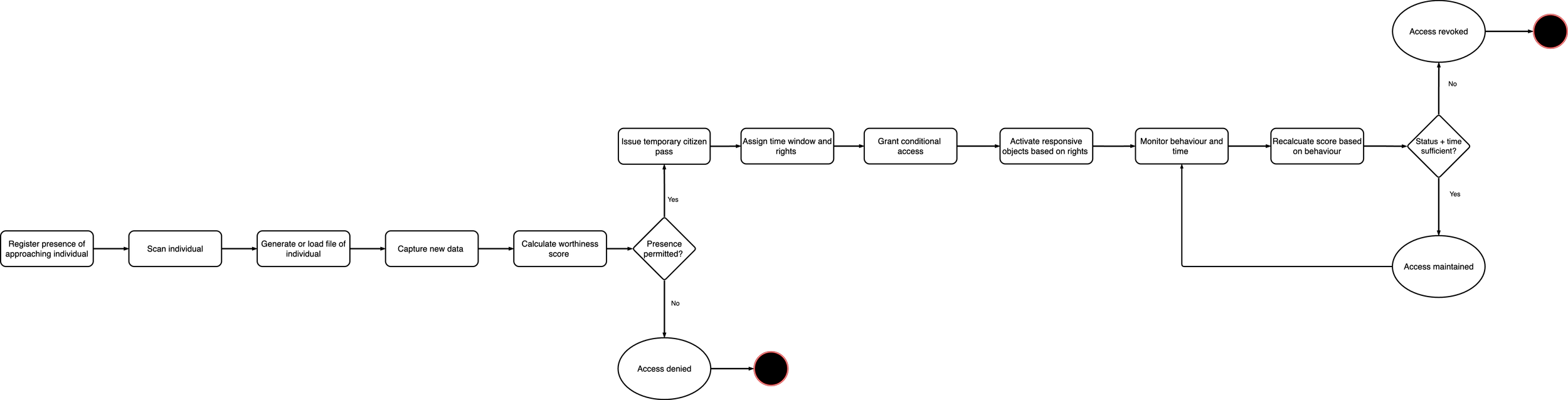
Part I: System Logic
Part II: System Components
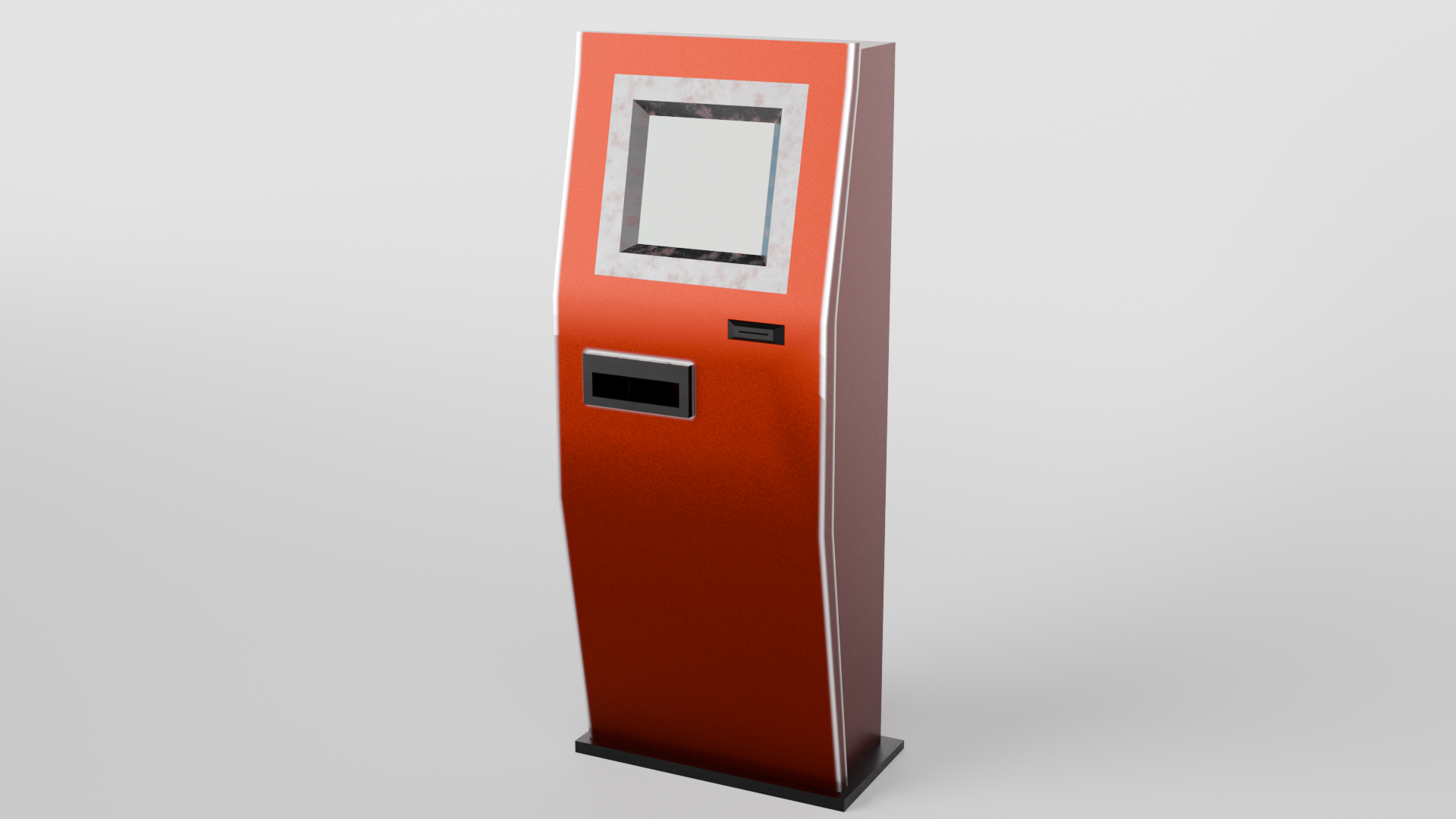
The Worthiness Scanner
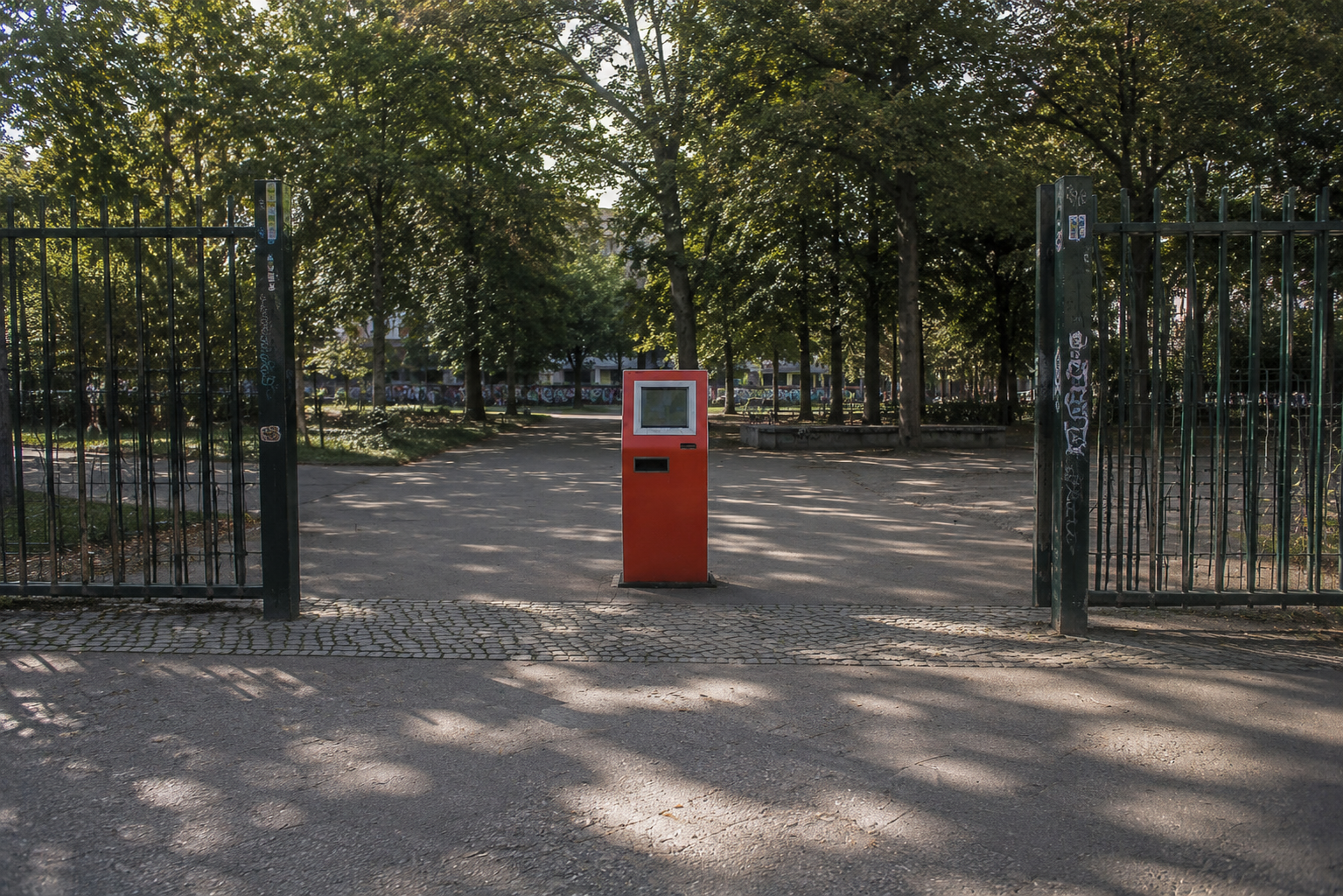
Installed at every entrance of the park, the worthiness scanner starts the evaluation process for every person entering the park. It registers their presence and captures observational data through sensors embedded in the machine. The system either creates a new profile or matches the person with an existing one.
New observations are then added to this profile and compared with previous data if available. Based on this data, the system calculates a “worthiness score”. The score determines whether access is granted, for how long, and under which conditions.
If access is granted based on the evaluation, the scanner prints a temporary citizen pass for the individual. The assigned status is not final. It can change throughout the stay through continued monitoring and re-evaluation.
The scanner does not physically block the entrance. Instead, it turns entry into a moment of expected compliance. People can walk past it, but risk later control, restriction, or punishment. In this way, access appears open, while actually becoming conditional.
The Temporary Citizen Pass
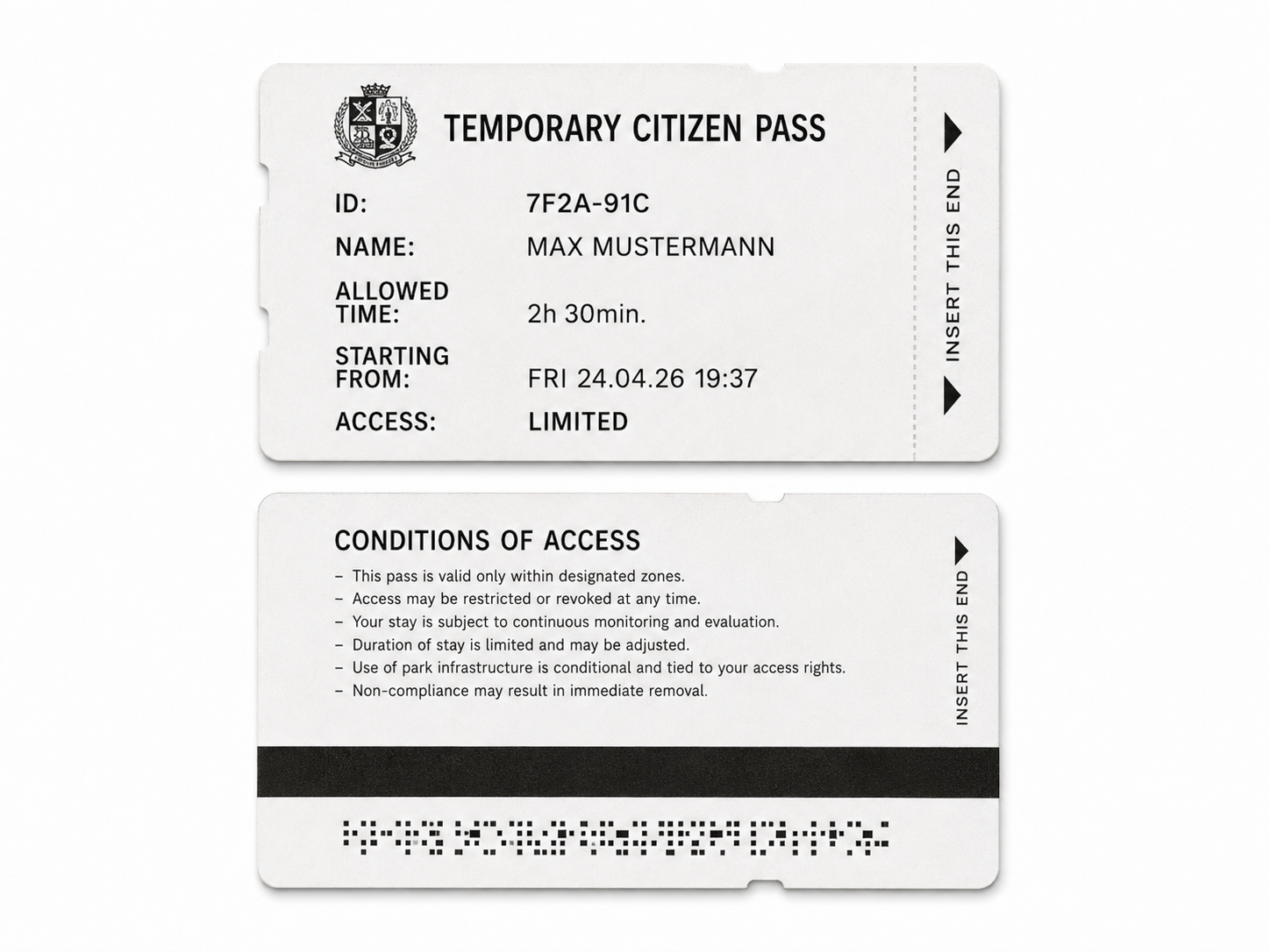
The Temporary Citizen Pass is issued after the evaluation process and serves as a temporary permission to use the park. It defines how long a person is allowed to stay and is linked to the profile created by the system.
Access begins when the pass is printed. It is valid only for one visit and must be renewed each time the person enters the park again. Its conditions are not fixed. They can change during the stay through continued monitoring and re-evaluation.
The pass must be presented at designated interaction points or access terminals to activate or extend access to specific features within the park. To use those features, the pass has to be inserted into the corresponding access terminal. The terminal reads the assigned status and decides whether the requested use is granted.
The pass also has to be shown during random checks by controllers. Losing it means losing the ability to prove valid access. Without a valid pass, the person loses their permission to stay and may be removed from the park.
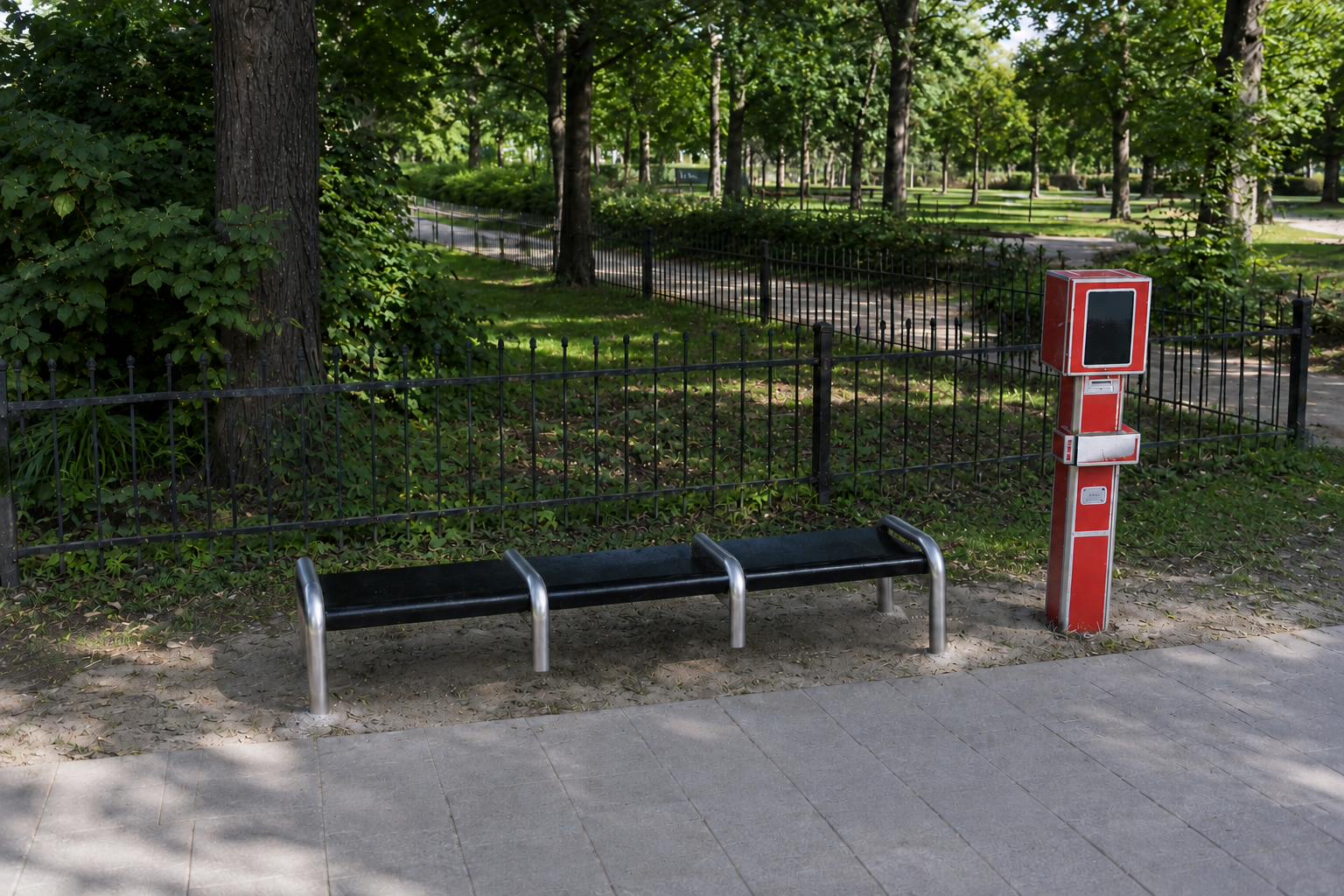
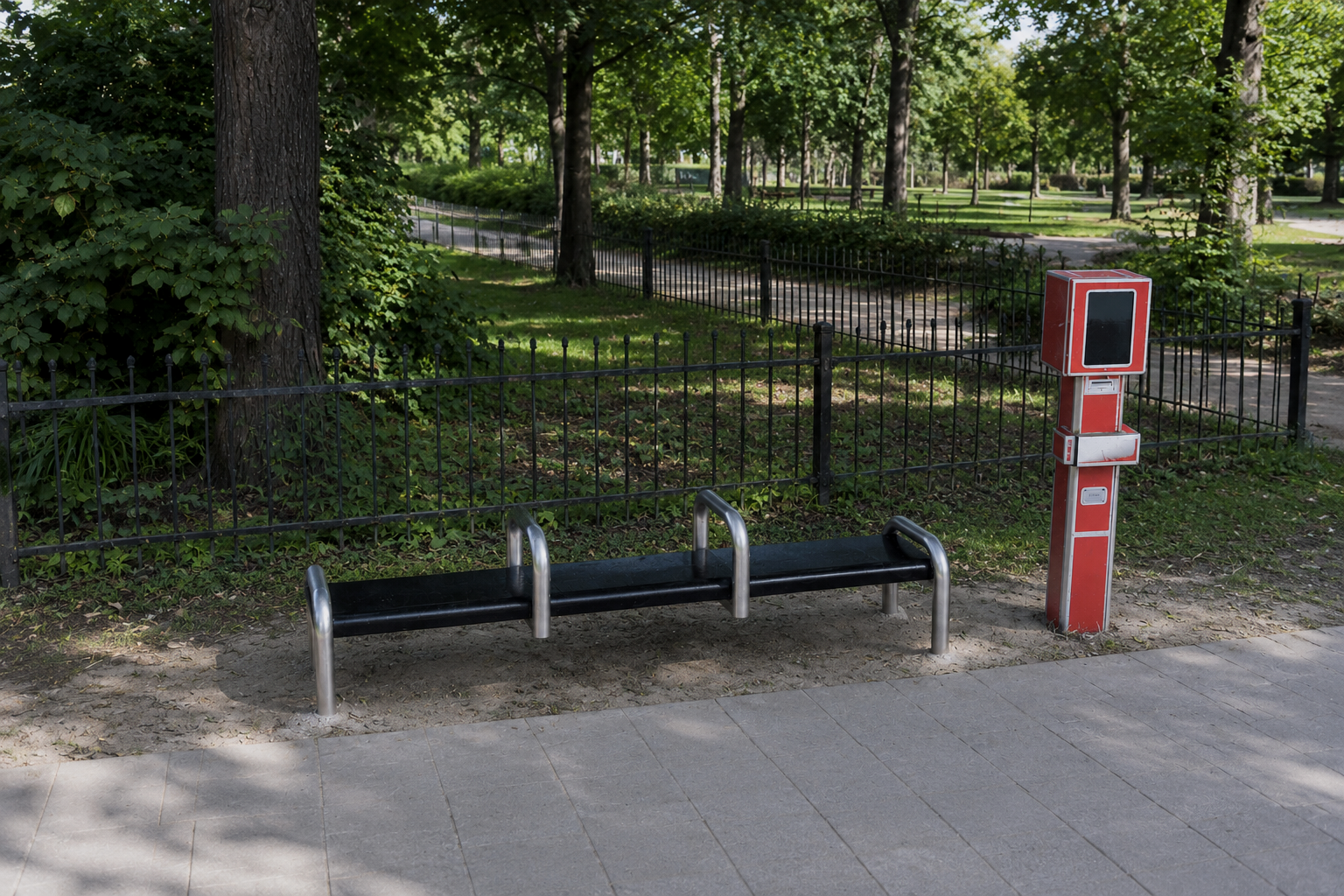
The Responsive Bench
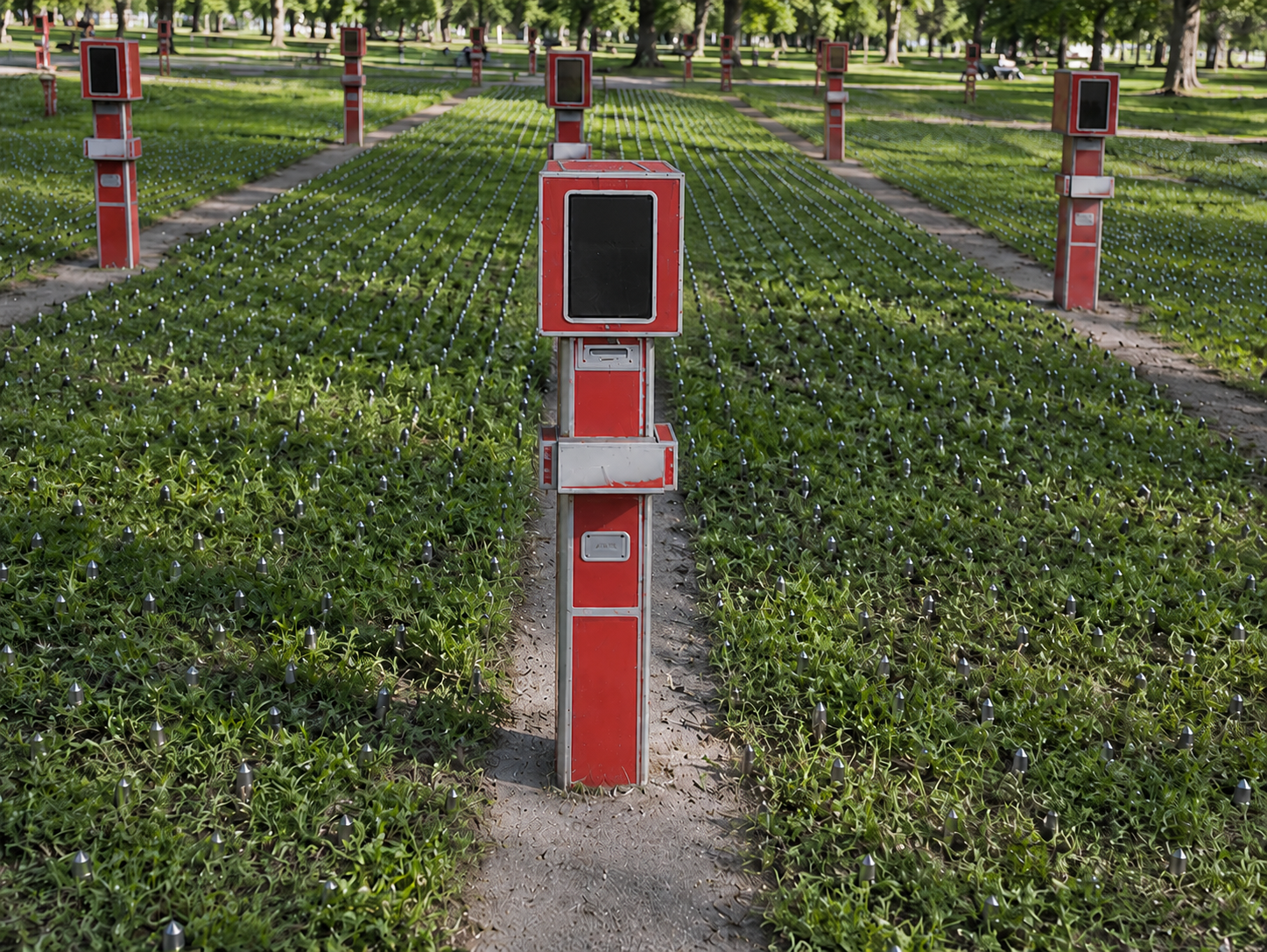
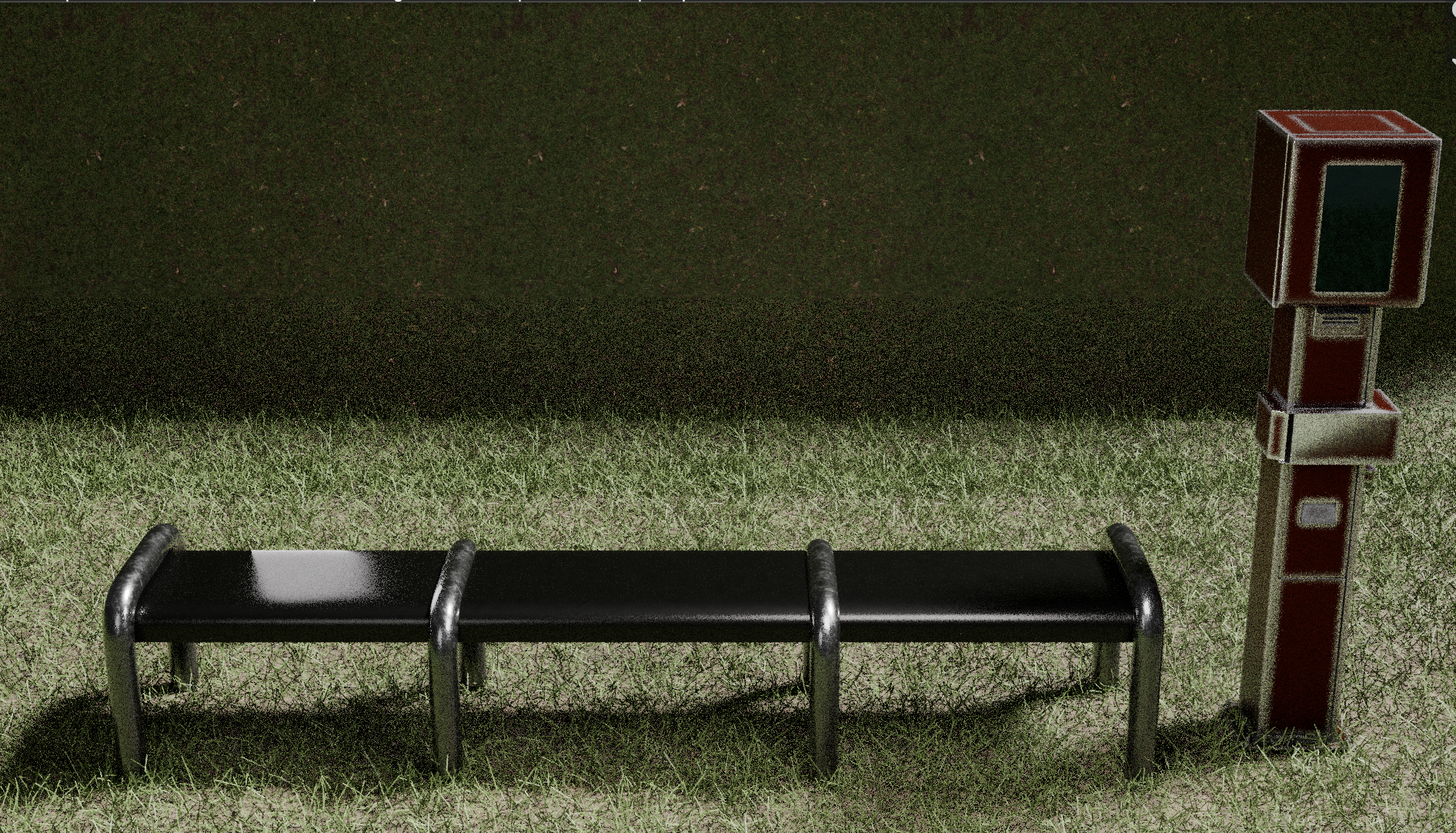
The park includes several benches that can be used for normal sitting without additional permission. Each bench is connected to an access terminal placed next to it. By inserting a valid Temporary Citizen Pass in the access terminal, the system reads the assigned access status and decides whether extended use is allowed. If access is granted, the armrests are temporarily lowered, allowing the bench to become a flat surface for resting or lying down.
The granted duration is shown on the terminal at the moment of activation. If extended use is not granted, the armrests remain in their default position. Once the allocated time has passed, the armrests automatically return to their original position. Unlike a conventional hostile bench, the Responsive Bench does not deny lying down completely. Instead, it appears to offer a more flexible and humane solution, while making comfort conditional on evaluation, permission, and time. At the same time, this flexibility becomes the mechanism of control. Comfort is no longer simply available. It has to be requested, granted, timed, and monitored.
The system is fictional, but its logic is not. The question is not only how this system makes us feel, but what it reveals about the spaces we already accept.
Methodology and Design Decisions
The starting point for this project was Görlitzer Park in Berlin. I pass through the park almost every day by bike, and over time I started to notice how the measures taken by the city seem to push some of the most vulnerable people even further to the margins of public life. For me, the construction of fences is not a social solution. It treats complex social problems as questions of space, order, and control. A park that should be open to everyone becomes something that is managed, limited, and increasingly conditional. What also stood out to me was the way people affected by homelessness, addiction, migration, or poverty are often discussed in public debate. They are talked about rather than talked with. They are framed as a problem to be removed, instead of as people who need support, care, and better social conditions. This project starts from that observation. It uses exaggeration, extrapolation, and critical design to ask where these logics could lead. What if public space did not become more open, but more controlled? What if exclusion was no longer hidden in benches, fences, and rules, but calculated and personalized?
I began by looking at existing forms of hostile architecture and how public space is already regulated through design and infrastructure. From there, I translated these logics into a speculative system: informal social judgement became a calculated score, and access to public space became a temporary, machine-readable permission. The visual development focused on objects that feel slightly futuristic, but still familiar from existing systems of control and access: public transport, borders, ticket validation, and regulated urban spaces. I worked with scanners, tickets, terminals, benches, and interfaces because they already carry the visual language of permission, movement, and restriction. I first sketched out how the park system could work and how the different components would relate to each other. From there, I created a system overview to define the main interactions.
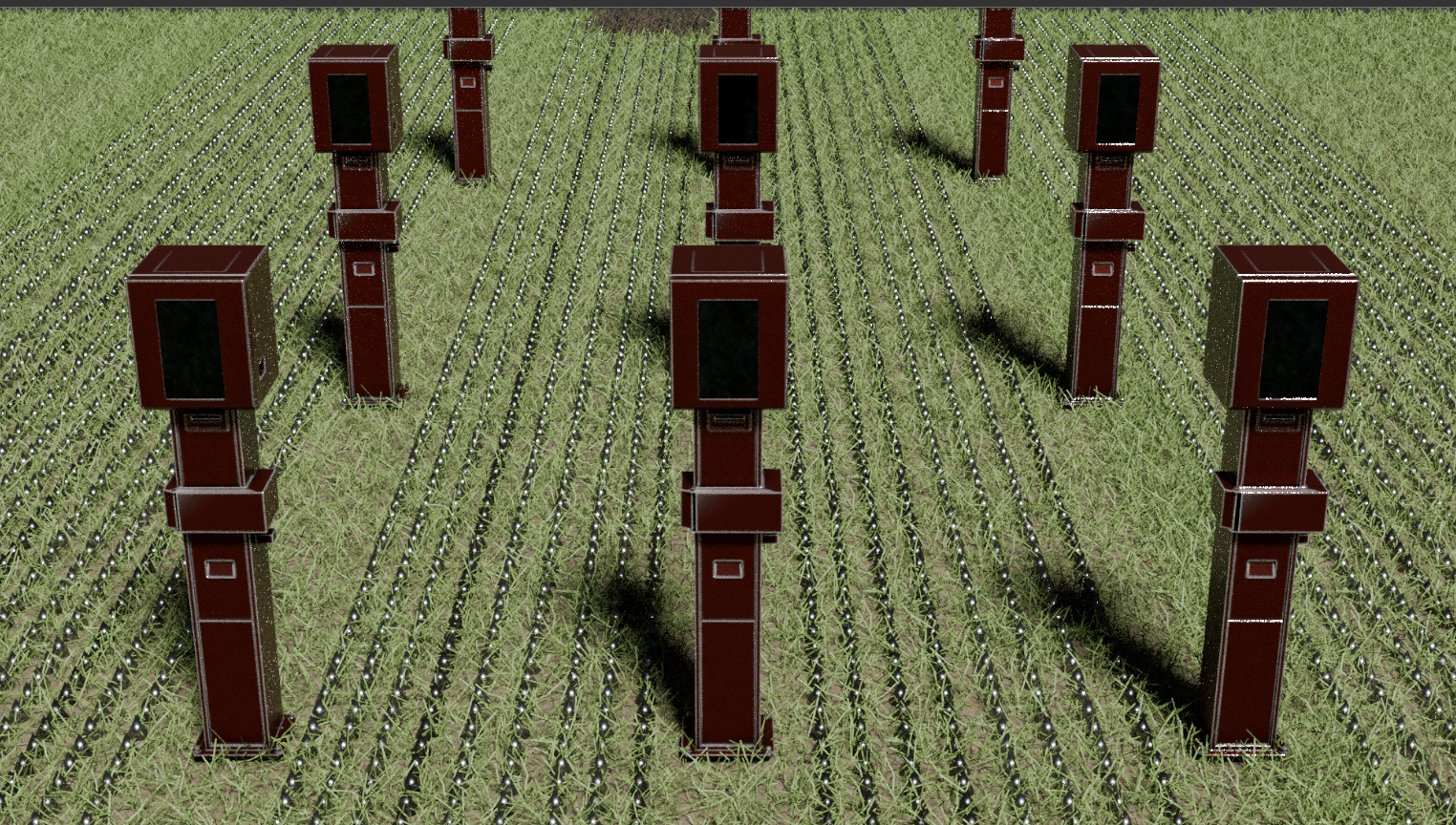
After that, I started building the objects in Blender. It took many iterations to find a version I was satisfied with. Some versions looked too futuristic, some too bulky, and others too unrealistic. All machines were designed to feel familiar. I did not want the project to look like a distant, futuristic tech scenario, but like something that could almost exist today. I built parts of the objects myself but also used existing Blender assets. The images below show my original Blender renders. The images above (in the project) are ChatGPT-assisted visualizations based on these renders. I chose to do it like this, to make the scenes appear more realistic and atmospheric. The underlying concept, system, and object designs are my own.
The system uses a physical, temporary pass to emphasize that access itself is temporary. At first, I considered using facial recognition or a similar invisible identification system, but that felt too futuristic and too detached from everyday experience. The pass makes the process tangible. It can be issued, held, inserted, checked, lost, or expire. It also suggests that access is not a permanent right, but something granted for a limited time.
I wanted the project to remain close enough to reality so that it could almost be argued for as a “solution” to existing problems. That is why the machines are relatively subtle and not designed to look openly threatening. Whether they still feel intimidating is something each viewer has to decide for themselves.
The scanner is placed at the entrance because it turns entering the park into a moment of evaluation. However, the entrance is not physically gated. Anyone could walk past the machine, similar to open metro systems where validation is expected but not always physically enforced. The risk is not immediate physical prevention, but later control, punishment, or exclusion.
The scanner does not explain itself. It assumes that everyone already knows what it is for and how they are expected to behave around it. This was important to me because many systems of control work exactly like that: they become part of everyday life until people stop questioning them.
The bench and lawn surface extend hostile design into a responsive system. They do not permanently deny use, but grant comfort only under certain conditions. One could even argue that this is more “humane” than a hostile bench that prevents lying down completely. In this system, the bench appears to offer an opportunity — but only after evaluation, permission, and time limitation.
The worthiness score is deliberately not explained. No one knows exactly what it calculates or how decisions are made. This uncertainty is part of the system. It creates a situation where people are expected to adapt their behaviour without fully knowing the rules.
The language of the system is deliberately neutral and administrative. Terms such as “access level”, “validity”, and “reassessment” make exclusion appear procedural, governmental, and almost reasonable rather than violent. This contrast was important to the project: the system does not need to look brutal in order to be controlling.
The most challenging part of the project was finding the right distance between realism and critique. The system had to feel believable enough to be uncomfortable, but not so believable that it would read as an actual proposal. I originally wanted to develop more objects within the park. The bench, lawn terminal, and Temporary Citizen Pass could be expanded into a larger system of conditional infrastructures: toilets, fountains, shelters, charging points, playgrounds, or shaded areas. For this version, I focused on a smaller set of objects, but a next step would be to explore how a whole public environment could be redesigned around conditional access.
Access-Controlled Resting Surface
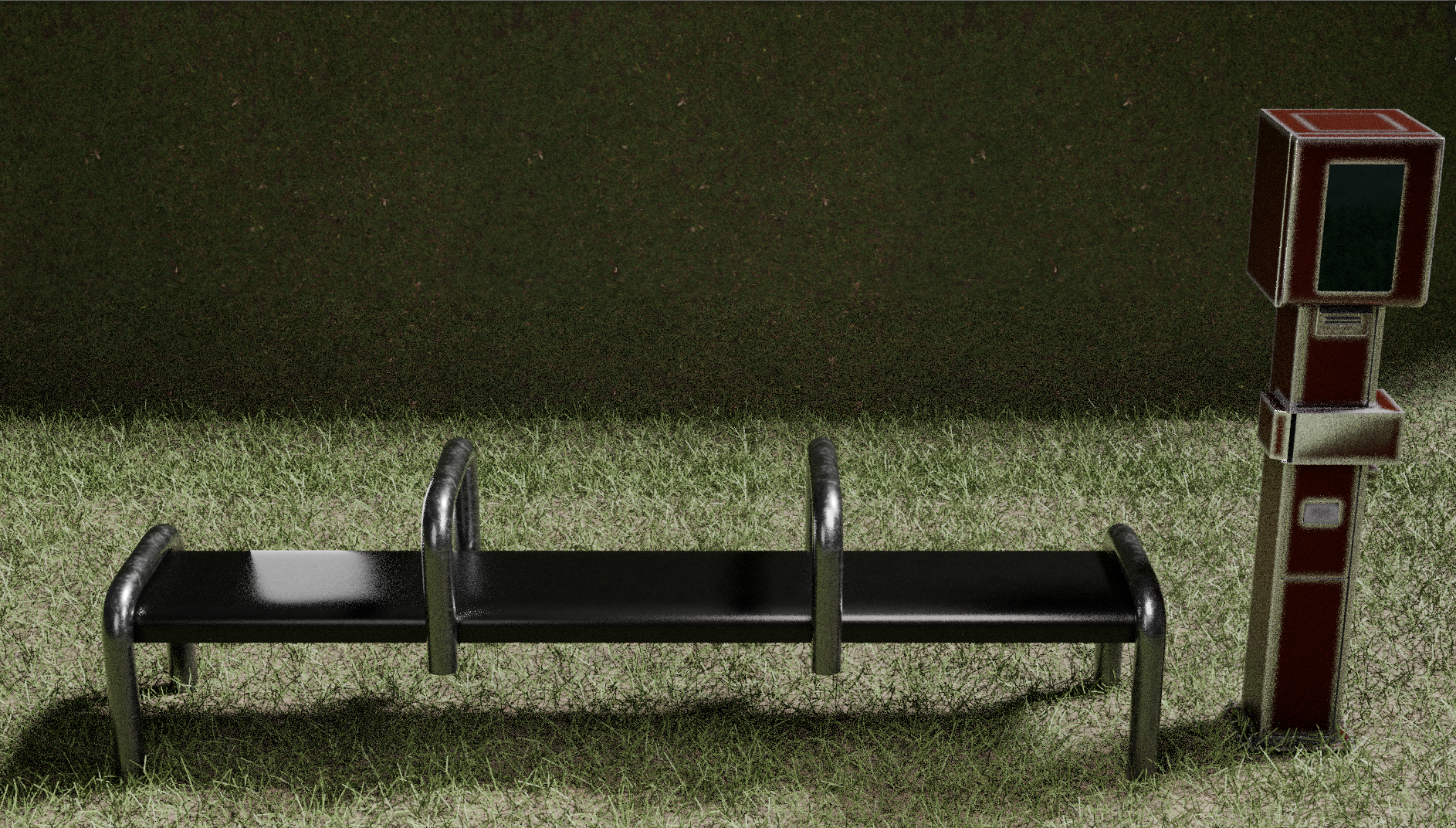
Open lawn areas are also connected to access terminals placed at regular intervals. In their default state, the ground is covered with deterrent spikes inspired by hostile design. Here, this logic is moved into the lawn itself, the surface that would usually feel most open and welcoming.
By inserting a valid Temporary Citizen Pass into the terminal, the system reads the assigned access status and decides whether a resting area can be activated.
If access is granted, the spikes within a defined radius are temporarily lowered. This creates a usable surface for sitting, resting, or lying down. The size of the activated area and the granted duration are shown on the terminal at the moment of activation.
Several terminals can be activated at the same time by different individuals. If activated zones overlap, they can form larger shared areas, depending on the access status of the people using them.
Once the allocated time has passed, the spikes automatically return to their default position.